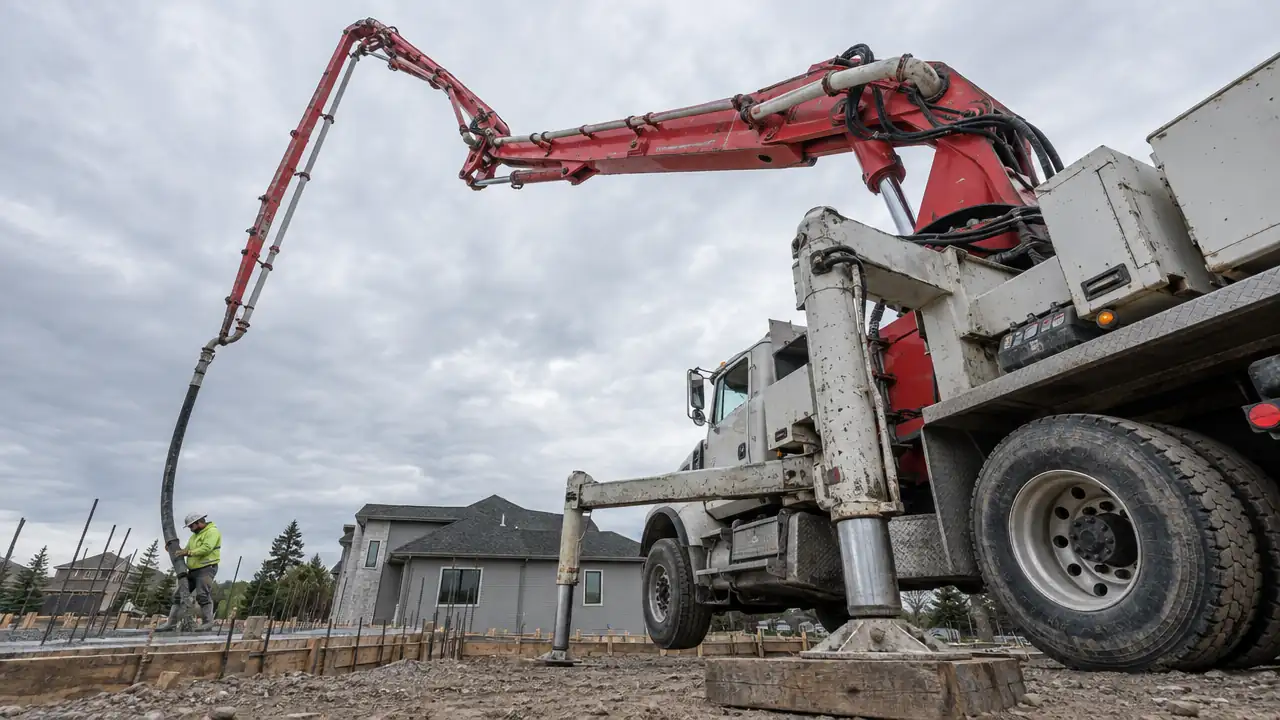
Facebook ads for concrete contractors
Facebook and Instagram ads create demand rather than catch it, so they work for concrete work people choose and not for concrete work people need urgently. Patios, stamped and exposed aggregate, and outdoor living sell well. Foundation repair does not. The photo is the ad, the leads arrive colder than search leads, and the follow-up decides whether any of it pays.
Why Meta is not Google with a different logo
Google Ads catches demand. Somebody has already decided they need a driveway, they type it in, and you pay to be there. The wanting has already happened.
Meta ads create demand. Nobody opens Facebook looking for a concrete contractor. They are looking at a nephew’s wedding photos, and your finished patio goes past. If it is a good enough photo, a thought starts that was not there ten seconds earlier.
That difference decides everything else: which services can work, what the creative has to do, how good the leads are, and how fast you have to call them.
| Google Search | Facebook and Instagram | |
|---|---|---|
| What it does | Catches demand that already exists | Creates demand that did not |
| Buyer state | Decided, comparing companies | Not thinking about concrete at all |
| Best services | Everything, especially urgent work | Wants rather than needs |
| Lead quality | Higher, and fewer | Lower, and more |
| Time to job | Weeks | Often months |
| Follow-up needed | Fast | Fast and persistent |
Which concrete work sells on Meta
The test is whether a photo of the finished job can make somebody want one. That is it.
| Service | Fit | Why |
|---|---|---|
| Stamped and decorative patios | Strong | The photo does all the selling. People screenshot these. |
| Exposed aggregate driveways | Strong | Visible upgrade over a plain slab, and neighbours notice. |
| Outdoor living packages | Strong | Firepit, seating, steps. Aspirational and high value. |
| Pool decks | Good | Seasonal, visual, and a clear before-and-after. |
| Plain driveways | Fair | Hard to make anybody want one. Works on replacement pain instead. |
| Garage and shop slabs | Fair | A practical purchase. Search suits it better. |
| Foundation repair | Poor | Urgent and frightening. Those people are searching right now. |
| Commercial flatwork | Poor | Bought by a site manager at a desk, through relationships. |
There is one useful exception on the driveway side. A replacement driveway does not sell as a want, but it does sell as a relief. An ad showing a cracked, lifted, thirty-year-old slab beside a finished one speaks to somebody who has been looking at that mess for two summers and putting it off.
This is why Meta suits some concrete work far better than the rest. Decorative and stamped contractors get more out of a feed than anyone else in the trade, because the finished job is the argument.
The photo is the ad
On search, the words do the work. On social, the photo does, and the words stop somebody who has already slowed down.
What works, in rough order:
- Finished work in daylight, shot straight. Wide enough to show the house, so it reads as a real home rather than a sample.
- Before and after, side by side. The single best performing format for replacement work in this trade.
- The crew working. Real people, real site. It reads as a business that exists.
- Detail shots. A crisp edge, a broom finish, a stamp pattern. These do well on Instagram.
What does not work: supplier stock photos, anything with a logo watermark across it, collages of six jobs at once, and photos taken at dusk on a phone with the flash on. Your crews already have better photos than this on their phones. The problem is nobody collects them.
A practical fix that costs nothing: put it in the job closeout. The last thing before the crew leaves is four photos, from the same four angles, of every finished job. In a season that is a library nobody else in your market has.
Video and before-and-after
Video outperforms still images on Meta most of the time, and concrete video is easier than people think because the work itself is watchable. Screeding, stamping, a power trowel going over a slab, a form coming off a step.
Keep it short and silent-first. Most people are scrolling with the sound off, so if the point needs audio the point is lost. Fifteen to twenty seconds, the finished result in the first two seconds rather than the last, and captions if anybody is talking.
The highest converting format we see for replacement work is a slow pan across the old broken slab, a cut, then the same view finished. No music, no narration, no branding until the end.
Campaign structure that works for a contractor
Meta rewards simplicity now. The old approach of twenty ad sets each with a hand-picked audience gets beaten by a handful of broad ones with good creative, because the platform is better at finding the buyer than you are at describing them.
A structure that holds up for most concrete contractors:
- One campaign for cold traffic, optimised for leads, with your service area and a broad audience. Three to five creatives in it, refreshed as they tire.
- One campaign for retargeting, aimed at people who visited the site, watched most of a video, or engaged with the page. Smaller budget, different message.
- Seasonal campaigns switched on and off, for pre-selling spring work or filling an autumn gap. The slow season plan is here.
Optimise for leads rather than traffic or engagement. Traffic campaigns buy you clicks from people who click things. Engagement campaigns buy you likes. Neither buys you work.
Targeting, and why it matters less than it used to
Set the geography properly and then mostly leave the rest alone.
- Radius or towns, not a whole province. Draw it where you would actually send a crew, including drive time rather than distance.
- Homeowners, where the option is still available. Renters cannot buy a driveway. This filter has narrowed over the years, so do not rely on it entirely.
- Age from about 30 up for most residential work, because that is roughly where home ownership starts.
- Exclude your existing customers by uploading your list. Nobody who just paid you for a driveway needs the ad.
Beyond that, resist the urge to stack interests. Narrow audiences cost more per person reached and the platform now finds buyers from the creative and the early conversions better than from an interest list.
Lead forms or landing page
This is the real decision on Meta, and the answer depends on your follow-up, not on the ads.
| Instant lead form | Landing page | |
|---|---|---|
| Lead volume | Higher | Lower |
| Lead quality | Lower. Two taps, no thought | Higher. They chose to keep going |
| Effort to set up | Low | Needs a real page first |
| Speed you must call | Minutes. They have already forgotten | Fast, but they remember you |
| Best for | Contractors with an office answering | Owner-operators who call back in batches |
If you use lead forms, turn off the pre-filled convenience where the platform offers the choice, and add one qualifying question. Asking “what are you looking to have done?” costs you some volume and removes most of the accidental taps. If you send traffic to a page instead, this is how to build it.
Budget, and what to expect
Meta needs a run at it. A week at a token budget produces numbers that are pure noise, and most contractors who conclude “Facebook does not work” concluded it from about nine leads.
Two rules that save money:
- Give it a month. The platform needs conversions to learn from, and your own pipeline needs weeks for a social lead to turn into a signed job.
- Do not test it in July. Your busiest month is when you follow up worst. Test in a shoulder month when you can actually call people back.
Run it alongside search rather than instead of it. Search pays this quarter. Social fills the pipeline for next quarter and keeps your name in front of a market in the months you are not top of mind. How to split the total budget is here.
The follow-up problem
This is where Meta budgets die, and it has nothing to do with the ads.
A search lead was already looking for you. A social lead was looking at something else four seconds before they filled in your form. Their intent is real but it is shallow, and it cools faster than anything from search.
What that means in practice:
- Automatic text back inside a minute. Not an hour. They need reminding what they clicked.
- Call attempt inside fifteen minutes during business hours, and first thing the next morning otherwise.
- More touches than you think. A social lead that goes quiet is normal, not a rejection. The five-touch sequence matters more here than anywhere else.
- Judge it on jobs, not leads. Thirty social leads and four jobs beats twelve search leads and three jobs, but only if you count it that way.
Retargeting, the part worth keeping
If you only run one thing on Meta, run this. Retargeting shows ads to people who already visited your website or watched most of a video. They know who you are, so it costs less and converts better than anything cold.
For a concrete contractor the useful audiences are small and obvious: everyone who visited a service page in the last 90 days, everyone who started a form and did not finish, and everyone who watched more than half of a project video.
The message changes too. Cold traffic gets a finished patio. Retargeting gets proof and a reason to act: reviews, a named guarantee, how far out you are booked. It is the cheapest paid work in most contractor accounts and it is usually the last thing anybody sets up.
Measuring it honestly
Meta will report conversions generously, because it counts people who saw the ad and later converted through some other route. Your own numbers are the ones to trust.
Track four things, and track them the same way you track search:
- Leads, by campaign.
- Cost per lead.
- How many became a real estimate appointment.
- How many became signed work, and what it was worth.
Then compare channels on the last number only. A channel with a cheap cost per lead and a bad close rate is more expensive than it looks, and a channel with an expensive cost per lead and good work attached is often the one to spend more on. The full set of planning numbers is here.
Give social a longer window than search when you judge it. A search lead that was going to close usually closes inside a month. A social lead can sit for a season and then call in spring, and a 30-day report will tell you the channel failed when it did not.
Questions
Do Facebook ads work for concrete contractors?
For the work people choose, yes. Patios, stamped concrete, exposed aggregate and outdoor living sell on a good photo. For the work people need urgently, like foundation repair or a failed slab, no. Those people are searching, not scrolling, and you should meet them on Google.
What does a concrete lead cost on Facebook?
Usually less per lead than Google Search and worth less per lead, which mostly cancels out. Treat a Meta lead as roughly half as likely to become a job as a search lead until your own numbers tell you otherwise, and judge both on cost per signed job rather than cost per lead.
Should I use Facebook lead forms or send people to my website?
Lead forms get more leads and worse ones, because it takes two taps and no thought. A landing page gets fewer and better. If you have the follow-up discipline to call inside fifteen minutes, use lead forms. If you do not, send them to a page and let it do some filtering.
How much should I spend to test Meta ads?
Enough to get past noise, which for most concrete markets means about a month at a real daily budget rather than a week at a token one. Below that you are reading randomness. And do not test it during your busiest month, because you will not follow up properly and you will blame the channel.
Is Instagram worth running separately?
Not separately, but keep it on. Finished concrete work is visual and Instagram placements often carry a chunk of the results for outdoor living and decorative jobs. Let the platform choose placements rather than splitting the budget by hand.