
Guides · Topic
Your website
A concrete website has one job, and it is not to look like a brochure. It is to turn somebody who is already interested into somebody who has sent you their address.
The pages that earn work on a concrete site are the ones that match a job somebody is trying to buy: a driveway page, a foundation page, a page for the city you actually pour in. A single page that lists every service and every city is the version that ranks for none of them.
The guides in this topic
The checklist is the shorter one, and it tells you what is missing. The landing page guide tells you how to build what is missing.
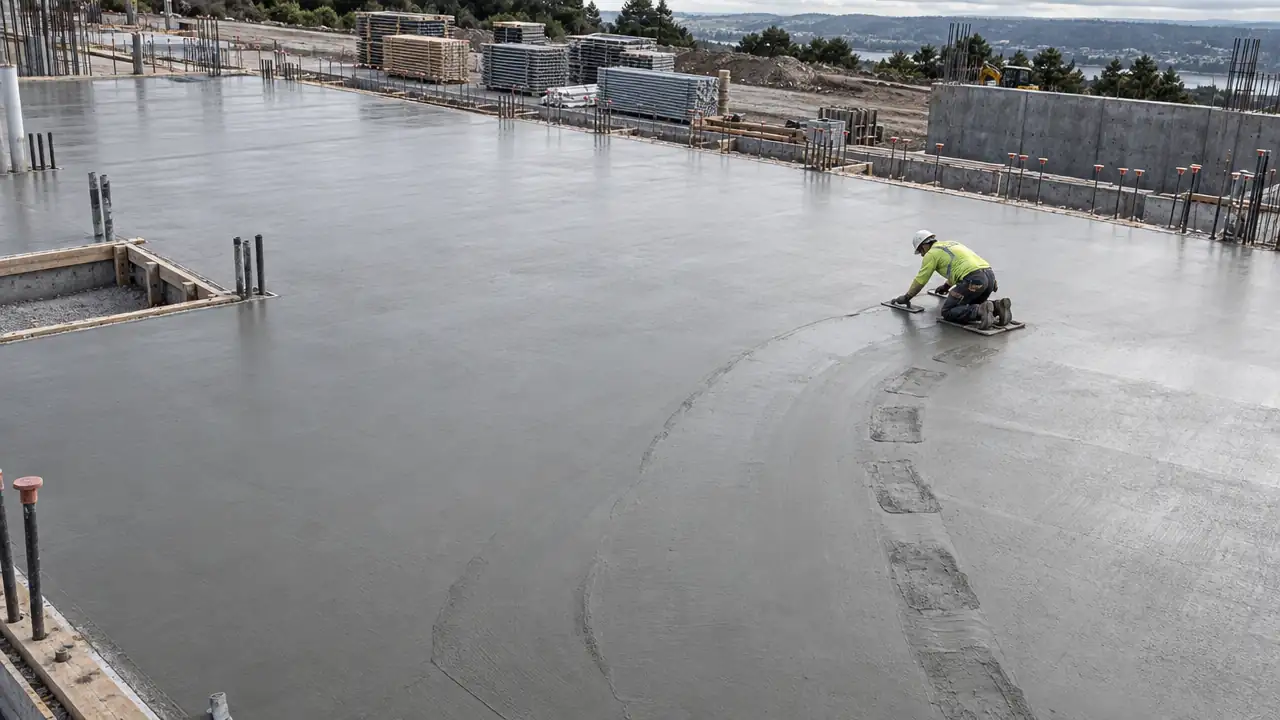
Landing Pages for Concrete Contractors: Service, Location and Ad Pages
The page a Google Ads click lands on decides what your leads cost. Service pages, city pages, message match, form length, and the build order.
Read it
The Concrete Contractor Website That Books Jobs: 11 Things Yours Is Missing
Eleven things missing from almost every concrete contractor website, and a 30-point checklist to score your own.
Read itThe short version, before you read any of them
What has to be on the page before it can earn a call?
A phone number that is tappable on a phone, the city you actually work in written in plain words, photographs of your own finished work rather than stock images, and a price signal of some kind. The price signal is the one most concrete sites skip. You do not have to publish a rate. Saying that most driveways in this city land between two numbers removes the fear that stops somebody calling.
Where is the doorway trap?
It is the moment somebody tells you to make a page for every city within two hours drive, and fill each one with the same paragraph and a different place name. Google has a name for that and it is not a compliment. A city page earns its place when it says something true about that city that is not true about the next one: the permit rule, the frost depth, the pouring window, the neighbourhood names.
How long should the form be?
Short enough that a person standing in a driveway will finish it. Name, phone, city, and what the job is. Every extra field is another chance to close the tab. You can ask the rest of the questions when you call back, which you were going to do anyway.
Questions
Do I need a new website or a fixed one?
If the site loads fast, works on a phone and you can edit it, it usually needs pages rather than a rebuild. If it is slow, hard to change or built on something nobody supports, the pages you add will fight the platform.
Does a blog help a concrete company?
Only if it answers questions your buyer actually types. Posts about company news do nothing. A post about what a concrete driveway costs in your city can bring work for years.
How fast does it have to load?
Fast enough that somebody on a phone in a driveway with two bars does not leave. Google publishes thresholds for this, and most concrete sites fail them on images that were never resized.
Where this sits on the rest of the site
The guides explain the thinking. These are the pages that say what we do about it and what it costs.
- Websites for concrete contractors is the service page behind this topic.
- Every price is on the pricing page, including what is not included.
- The locations page has local research for ten cities.
The other topics
- Original research — 4 guides.
- Getting found on Google — 2 guides.
- Running ads — 2 guides.
- Getting and closing leads — 4 guides.
- What it costs — 2 guides.
Want this applied to your city instead of read about?
The free audit takes your market apart: who ranks, what it costs, and the three things that would move it fastest.